
Bättre att välja kraftigare bindning?
Från en kommentar av Marshal på blistergear i Bindings 201:
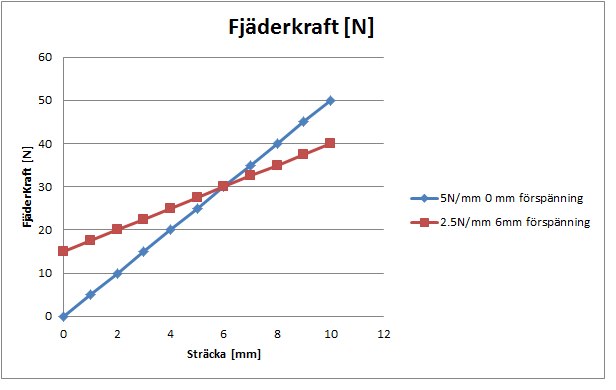
basic engineering principles dictate that as you increase preload on a spring (i.e. add din). you are making it harder to move INITIALLY. the spring rate (k) is a constant.
generally if you need or want more than 1-2 turns of preload on a spring, you would be better off swapping to a higher stiffness spring.
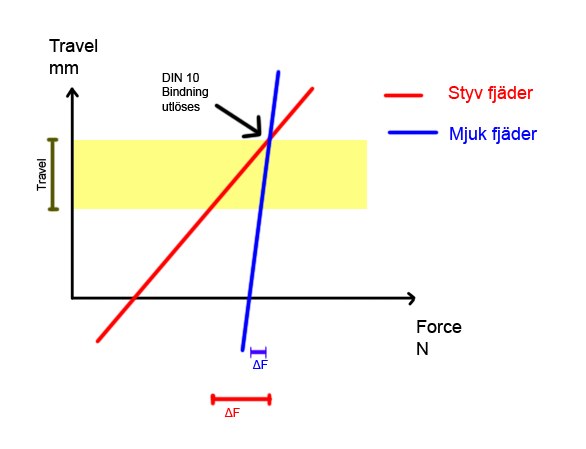
my hypothesis is that making a boot harder to move initially in the bindings travel makes it more likely to cause injury. DIN means is that it takes the same amount of force to release. it does not account for the spring stiffness and the amount of travel in the release… higher spring stiffness + more travel = less preload needed = smoother initial travel of the binding = less likely to injure oneself.
in binding speak, IMO a duke 6-16din binding would be best served being skied by someone in the 6 to 9-10 din range (the lower 1/3 to 40% of its range). i fully realize that flies directly in the face of conventional wisdom in ski land, but well… you asked my opinion
one should not be married to a DIN value. every binding is different. there are a few variables: spring stiffness (k), spring preload (p) and elasticity/travel (d). i personally ski at a 13.5 on a marker duke, but a 12 on a salomon 920 (12-20 range), and have equal ability to retain in the binding, but more faith in the 920 not hurting me since the motion is so much smoother.
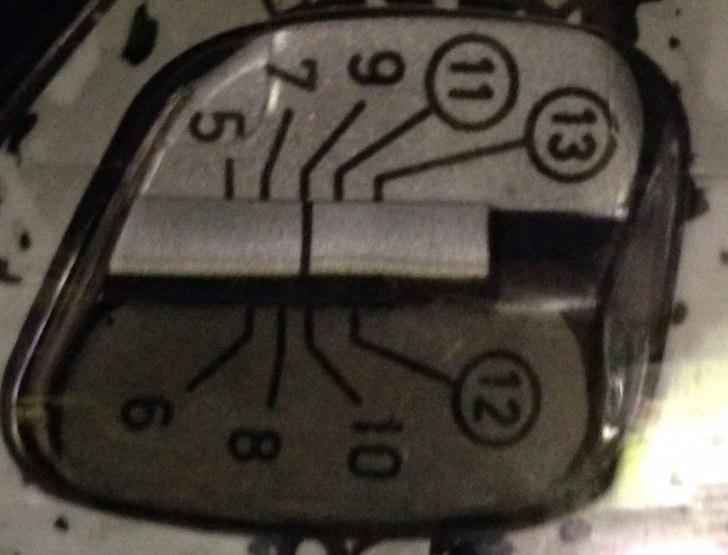
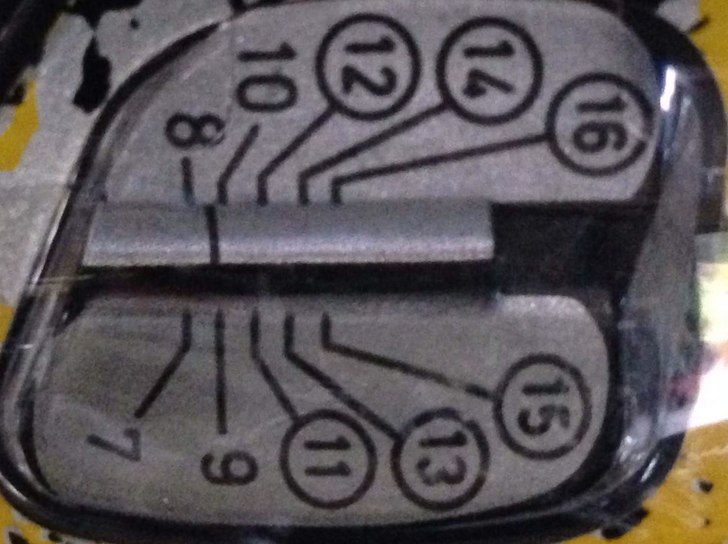
Håller ni med det att man alltså borde välja en bindning med kraftigare fjäder även om DIN-intervallet på den klenare bindningen skulle räcka till? I mitt fall väljer jag mellan salomon sth 2 wtr 13 eller 16, har vanligen DIN 8-9. Mina mekanikkunskaper är rostiga...
basic engineering principles dictate that as you increase preload on a spring (i.e. add din). you are making it harder to move INITIALLY. the spring rate (k) is a constant.
generally if you need or want more than 1-2 turns of preload on a spring, you would be better off swapping to a higher stiffness spring.
my hypothesis is that making a boot harder to move initially in the bindings travel makes it more likely to cause injury. DIN means is that it takes the same amount of force to release. it does not account for the spring stiffness and the amount of travel in the release… higher spring stiffness + more travel = less preload needed = smoother initial travel of the binding = less likely to injure oneself.
in binding speak, IMO a duke 6-16din binding would be best served being skied by someone in the 6 to 9-10 din range (the lower 1/3 to 40% of its range). i fully realize that flies directly in the face of conventional wisdom in ski land, but well… you asked my opinion
one should not be married to a DIN value. every binding is different. there are a few variables: spring stiffness (k), spring preload (p) and elasticity/travel (d). i personally ski at a 13.5 on a marker duke, but a 12 on a salomon 920 (12-20 range), and have equal ability to retain in the binding, but more faith in the 920 not hurting me since the motion is so much smoother.
Håller ni med det att man alltså borde välja en bindning med kraftigare fjäder även om DIN-intervallet på den klenare bindningen skulle räcka till? I mitt fall väljer jag mellan salomon sth 2 wtr 13 eller 16, har vanligen DIN 8-9. Mina mekanikkunskaper är rostiga...